Ever wondered what happens when a professional misstep could cost not only your reputation but also your bank account? In the realm of business, errors and omissions insurance is the safety net that professionals lean on when human errors lead to financial fallout. Whether you’re in real estate, consulting, or another field where advice and services are your bread and butter, E&O insurance shields you from the unexpected.
In Washington State, understanding the nuances of errors and omissions insurance is crucial for businesses aiming to protect themselves from claims and lawsuits. This guide delves into what you need to know about acquiring and managing this essential policy. So buckle up as we explore the ins and outs of errors and omissions insurance in the Evergreen State with a Backlinko-flair that’ll keep you engaged from start to finish.
Understanding Errors and Omissions Insurance
Did you know that lawsuits over professional mistakes can cost you millions? Enter Errors and Omissions Insurance (E&O). It’s your shield against claims of negligence or inadequate work.
E&O insurance is crucial for professionals whose advice or services could lead to client losses. Think attorneys, architects, and accountants. And it’s not just about big mistakes; even small oversights can lead to big legal bills.
The Purpose and Protection of E&O Insurance
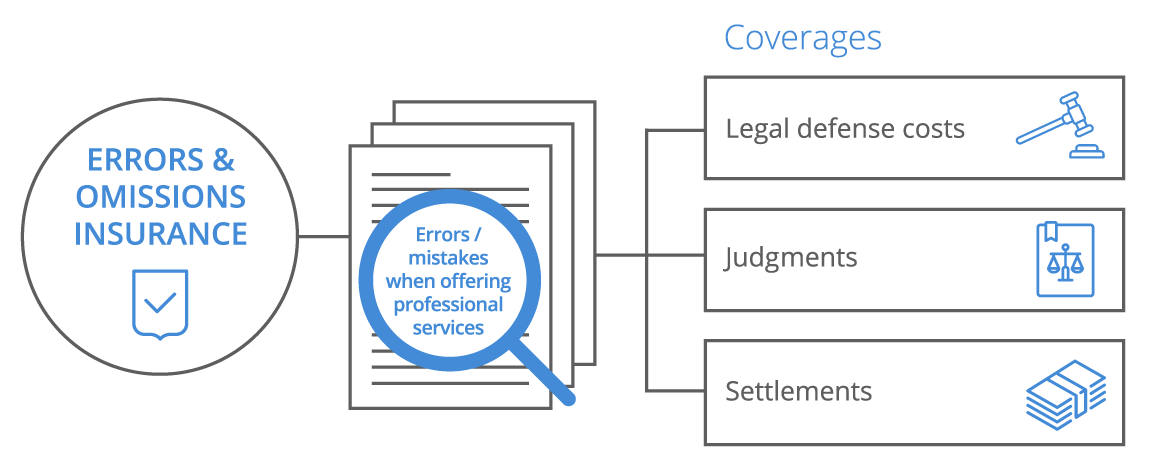
So, what exactly does this insurance do? It covers legal defense costs and settlements when you’re accused of making an error in your professional services. This is not a luxury. It’s a necessity.
For example, a financial advisor might miscalculate investment risks, costing a client thousands. Without E&O insurance, you’d be paying out of pocket. Ouch.
The key components of E&O policies include coverage limits, deductibles, and exclusions. Understanding these terms is essential for choosing the right policy.
Pro Tip: Always check if your E&O policy includes defense costs within the coverage limits or if it’s an additional cost.
Who Needs Errors and Omissions Insurance?
It’s not just for the usual suspects. Real estate agents, consultants, and IT professionals also need this coverage. Essentially, if you offer advice, you need protection.
Consider a consultant whose strategy leads to a client’s financial loss. Even with the best intentions, things can go south. That’s where E&O steps in, covering claims for errors and negligence.
Scenarios Where E&O Insurance is Essential
Imagine this: You’re a web designer, and a site you built crashes during a client’s big launch. They sue for lost sales. E&O is your safety net here.
Or, you’re an engineer and a calculation error leads to construction delays. Such mistakes can cost companies dearly, and without E&O insurance, those costs could fall on your shoulders.
The bottom line? If your work affects others financially, E&O insurance is not optional; it’s vital.
Errors and Omissions Insurance in Washington State
Did you know that businesses in Washington State face unique challenges when it comes to Errors and Omissions (E&O) insurance? Navigating these regulations can be tricky, but understanding them is vital to protect your business.
Errors and Omissions insurance in Washington is governed by specific regulations designed to protect both businesses and their clients. It’s not just about having any insurance policy; it’s about having the right one that complies with state requirements. Let’s dive into what you need to know.
Regulations Governing Errors and Omissions Insurance
In Washington State, E&O insurance is not just a suggestion; it’s a requirement for many industries. Whether you’re in real estate, legal services, or consulting, you need to ensure your policy meets state mandates. This includes having adequate coverage limits that align with the potential risks in your industry.
However, here’s the deal: Washington’s regulations are particularly stringent on disclosure. Businesses must clearly artikel any exclusions in their policies to avoid potential disputes with clients. This means you can’t just rely on a generic policy to cover your bases.
State Requirements for Businesses
Washington State requires businesses to carry E&O insurance depending on their service offerings. The coverage should be comprehensive enough to cover common claims in your field, such as negligence or failure to perform. But it’s not just about ticking boxes; understanding the nuances of your policy is key.
Pro Tip: Always review your policy with a legal expert who understands Washington State’s E&O insurance requirements.
For example, real estate agents must have a policy that covers specific risks associated with property transactions. Missing out on these details can lead to significant liabilities.
State-Specific Exclusions and Limitations
Washington State’s E&O policies often come with specific exclusions, such as intentional acts or fraudulent activities. Understanding these exclusions is crucial because they can leave you vulnerable if not addressed. Also, some policies limit coverage for certain high-risk industries.
These limitations mean you must carefully tailor your policy. Don’t assume that a one-size-fits-all approach will work here. Instead, focus on customizing your coverage to match your business’s unique needs.
Comparing Washington State’s Regulations to Another State
When comparing Washington’s E&O insurance regulations to those of another state, you’ll find significant differences, particularly in the area of minimum coverage requirements and policy disclosures.
| Criteria | Washington State | California |
|---|---|---|
| Minimum Coverage | Industry-specific, often higher | Standardized across industries |
| Policy Disclosure | Strict, detailed requirements | Less stringent, more flexibility |
| Exclusions | Specific to high-risk industries | General exclusions applicable |
By understanding these differences, you can better navigate the regulations and ensure that your business remains compliant and protected.
Obtaining Errors and Omissions Insurance
:max_bytes(150000):strip_icc()/EO-Final-35aff6b5f50644aabd242e60da643e80.jpg "Understanding Errors and Omissions Insurance in Washington State - bad ...")
Did you know that 40% of small businesses will face a legal action in the next 10 years? That’s why Errors and Omissions Insurance is crucial. But how do you actually get it in Washington State?
Here is the deal: obtaining this insurance involves a few critical steps. You can’t just walk into any provider and sign up. You need to be strategic to get the best coverage.
The Process of Acquiring Insurance
Step #1: Research insurance providers focusing on their reputation and client reviews. Washington State has plenty of options, but not all are created equal.
Step #2: Compare policies. Check if they cover specific industry risks you might face. But don’t just look at the premium prices. Consider deductibles and exclusions too.
Pro Tip: Bundle your insurance policies with the same provider to potentially save on premiums!
Step #3: Contact providers directly. Speak to an agent to get personalized advice and clarify any doubts. Don’t rely solely on online info.
Evaluating Insurance Providers for Best Coverage
First, identify your business needs. Does the provider offer tailored solutions for your industry? Next, assess their financial strength. Providers rated A or higher by AM Best are usually more reliable.
Finally, check customer service quality. A helpful provider can make all the difference when it comes time to file a claim.
Negotiating Terms and Premiums
Don’t be shy about asking for discounts. Use your company’s good track record as leverage. Have you had few or no claims in the past? This can work in your favor.
Here is the deal: Understand what you’re paying for. Ask for a breakdown of your premium to identify areas where you can cut costs.
Checklist of Required Documents
Before you apply, gather these essential documents:
- Business License
- Operational History
- Financial Statements
- Previous Insurance Records
- Detailed Business Plan
Having everything ready will not only speed up the process but also project a professional image to potential insurers.
Pro Tip: Digitize your documents. This makes it easier to share with multiple providers during your search.
Benefits and Risks of Errors and Omissions Insurance
Did you know that 1 in 7 businesses faces a lawsuit every year? That’s where Errors and Omissions Insurance steps in to save the day. We’re diving deep into the benefits and risks of this crucial coverage.
Let’s explore why having this insurance can be a game-changer for your business and what could happen if you skip it.
Why You Need Errors and Omissions Insurance
If you’re running a business, you know mistakes happen. Here’s the deal: Errors and Omissions Insurance can be your safety net. Imagine a client sues you for a simple oversight. Without this coverage, you could face financial ruin.
- You get legal defense coverage, even if a claim is groundless.
- It helps protect your personal and business assets.
- Peace of mind knowing you’re covered for honest mistakes.
- Enhances credibility with clients who require proof of insurance.
Risks of Skipping Errors and Omissions Insurance
Operating without this insurance? You might be walking a tightrope. Here’s why: One lawsuit could wipe out your savings and damage your reputation.
- Out-of-pocket legal costs can be astronomical.
- Loss of clients due to lack of trust.
- Potential bankruptcy if settlements or judgments are high.
- Increased stress and anxiety managing legal troubles.
How Errors and Omissions Insurance Protects You
This insurance isn’t just a safety net; it’s a fortress. It shields you from claims of negligence or inadequate work. Whether it’s a miscommunication or a client’s unrealistic expectations, you’re covered.
| Benefits | Risks Without It |
|---|---|
| Financial protection from legal claims | Paying out-of-pocket for legal fees |
| Increased client trust and business reputation | Loss of clients who demand insurance |
| Avoiding devastating financial losses | Potentially facing bankruptcy |
Pro Tip: Always read the fine print of your policy to understand what’s covered and what’s not.
Common Claims and Coverage Scenarios
Did you know that the average cost of an errors and omissions claim can exceed $50,000? That’s a hefty price tag for any professional or business. But with the right E&O insurance, you can protect yourself from these costly mistakes.
Common claims under errors and omissions insurance often stem from allegations of negligence or misrepresentation. Maybe you missed a crucial detail in a contract. Or perhaps a client is unhappy with the advice you provided. Whatever the case, understanding how these claims are processed can save you a lot of headaches.
How Claims Are Handled and Processed
When a claim is filed, the insurance company steps in to assess the situation. Their first move? Investigating the claim’s legitimacy. They’ll look at all the details and decide if it falls under your policy’s coverage.
- The insurer will assign a claims adjuster.
- Documentation and evidence are gathered from both parties.
- Legal experts may be consulted to evaluate the claim’s details.
- Finally, a decision is made – either to settle or to contest the claim.
Here’s the deal: The smoother the claims process, the faster you can get back to business as usual.
Steps to Filing an E&O Claim
Filing a claim can be daunting. But if you follow these steps, you’ll be on the right track:
| Step | Action |
|---|---|
| Step #1 | Notify your insurer immediately upon discovering a potential claim. |
| Step #2 | Collect all relevant documents and communications. |
| Step #3 | Work closely with your claims adjuster. |
| Step #4 | Provide any additional information requested promptly. |
Pro Tip: Always keep detailed records of your projects and communications. This can make or break your case.
Impact on Premiums and Renewals
Here’s a question: How does a claim affect your premiums? The answer isn’t always straightforward. While one claim might not cause a spike, multiple claims can lead to increased premiums or even non-renewal of your policy.
Insurers view frequent claims as a red flag. So, it’s crucial to manage risks effectively and maintain a good track record. By doing so, you can keep your premiums steady and your coverage secure.
Cost Factors and Premium Determination
Ever wonder why your E&O insurance premiums seem so high? You’re not alone. Many business owners struggle to decode the complex pricing model insurance companies use.
Here’s the deal: the cost of your errors and omissions insurance isn’t just pulled out of thin air. It’s determined by several key factors that you’d want to know if you’re planning to save on insurance costs. Let’s dive in.
Factors Influencing E&O Insurance Premiums
First off, industry type plays a massive role. If you’re operating in a high-risk field like finance or real estate, you’ll likely face higher premiums. The reason? These industries face more claims. Second, the size of your business matters. A larger company often means more exposure to risks, which translates into higher premiums. Lastly, your claims history can either make or break your premium rates. A history of few or no claims? Congrats, you might see lower premiums.
Impact of Business Size and Type
So, how do the size and type of your business affect your insurance costs? Simply put, a small tech startup might pay less compared to a large financial firm due to less risk exposure. But even if you’re a smaller business, working in a high-stakes industry can still lead to higher rates. It’s a balance, but understanding your industry risk profile is crucial.
Strategies to Reduce E&O Insurance Costs
You might be asking, “How can I lower my insurance premiums?” Start by implementing strong risk management strategies. This reassures insurers that you’re less likely to file a claim. Plus, shopping around for quotes and maintaining a clean claims history can save you big bucks. Another approach? Increase your deductible to lower your premium. Just make sure you have the cash flow to cover it if needed.
Pro Tip: Consider bundling your E&O insurance with other policies from the same insurer for possible discounts.
E&O Premium Rate Comparison by Industry
Curious about how your rates stack up against other industries? Check out this comparison table:
| Industry | Average Annual Premium |
|---|---|
| Technology | $1,200 |
| Real Estate | $2,000 |
| Financial Services | $3,500 |
| Consulting | $1,500 |
These figures highlight the variability across sectors. Use this as a benchmark when negotiating your own premiums.
Closure
In the ever-evolving world of business, having the right safety nets in place is not just smart—it’s essential. Errors and omissions insurance in Washington State offers just that kind of protection, ensuring that businesses can navigate the choppy waters of professional liability with confidence. By understanding the specifics of E&O insurance, you’re not just safeguarding your business, but also empowering it to thrive under any circumstance.
Q&A
What exactly is errors and omissions insurance?
Errors and omissions insurance is a type of professional liability insurance that protects businesses and individuals against claims made by clients for inadequate work or negligent actions.
Who needs errors and omissions insurance in Washington State?
Professionals such as real estate agents, consultants, insurance brokers, and other service providers typically require E&O insurance to cover potential client claims.
Are there specific E&O insurance requirements in Washington State?
Yes, Washington State has regulations that mandate certain businesses, especially those in professional services, to carry errors and omissions insurance to protect against liability claims.
Can errors and omissions insurance help with legal defense costs?
Yes, E&O insurance generally covers legal defense costs, settlements, and judgments up to the policy limit for covered claims.
How does an E&O insurance claim affect future premiums?
Filing a claim may lead to an increase in premiums, as insurers consider past claims when determining risk and pricing future policies.
