As a small business owner, you’re no stranger to risks. Whether it’s a slip-and-fall accident at your shop or a data breach affecting your online business, the potential for unforeseen events is limitless. That’s why having the right insurance is not just a recommendation but a necessity.
In this guide, we’ll dive deep into the world of small business insurance, focusing on three key commercial policies that could be your saving grace. Stick around to ensure your venture is not just surviving but thriving, with peace of mind knowing you’re covered from unexpected setbacks.
Overview of Small Business Insurance
Did you know that 40% of small businesses will experience a property or liability loss in the next 10 years? Insurance is not just a safety net—it’s a business lifeline. It protects your hard work against unforeseen catastrophes.
Small businesses are particularly vulnerable to risks like property damage, lawsuits, and theft. Without insurance, one unfortunate incident could spell disaster. BUT here’s the deal: with the right insurance, you can mitigate these risks and focus on growth.
Types of Risks Small Businesses Face
From natural disasters to data breaches, the risks are endless. Property damage doesn’t just mean a broken window; it could mean shutting down for weeks. Liability issues could arise from anything, including a customer slipping on your premises. AND don’t forget about cyber threats—an ever-increasing danger for all businesses.
Pro Tip: Always evaluate the specific risks associated with your business sector. Different industries have unique vulnerabilities.
Common Insurance Policies for Small Businesses
Understanding your options is crucial. A Business Owner’s Policy (BOP) usually covers both property and general liability, making it a popular choice. Workers’ Compensation is another must-have, protecting both employers and employees in case of on-the-job injuries. Lastly, professional liability insurance is essential for service providers to cover errors and omissions.
Types of Insurance for Small Businesses
Are you overwhelmed by all the insurance options out there for your small business? You’re not alone. Navigating through them can feel like you’re trying to find a needle in a haystack.
But here is the deal: understanding the different types of insurance can help you protect your business from the unexpected. Let’s break down the essential policies that every small business owner should know about.
Understanding General vs. Professional Liability Insurance
When it comes to protecting your business, two major types of insurance often come up: General Liability Insurance and Professional Liability Insurance. But they’re not the same thing. General liability covers common risks like physical injuries or property damage. On the other hand, professional liability—often called errors and omissions insurance—covers you against claims of negligence or mistakes in the services you provide.
If you’re a small business owner, you might be wondering which one is right for you. The answer? It depends on the nature of your business. Here’s a simple way to think about it: if you have a physical location or handle physical products, look more closely at general liability. If your business is service-oriented, you should lean towards professional liability.
Pro Tip: Combine both for comprehensive coverage.
Here’s a quick overview of different types of insurance coverage available for small businesses:
| Insurance Type | Coverage Details | Ideal For | Benefits |
|---|---|---|---|
| General Liability Insurance | Covers bodily injuries, property damage, and medical expenses. | Retail stores, restaurants, and offices. | Protects against lawsuits and claims. |
| Professional Liability Insurance | Covers negligence and errors in professional services. | Consultants, accountants, and lawyers. | Safeguards against costly legal disputes. |
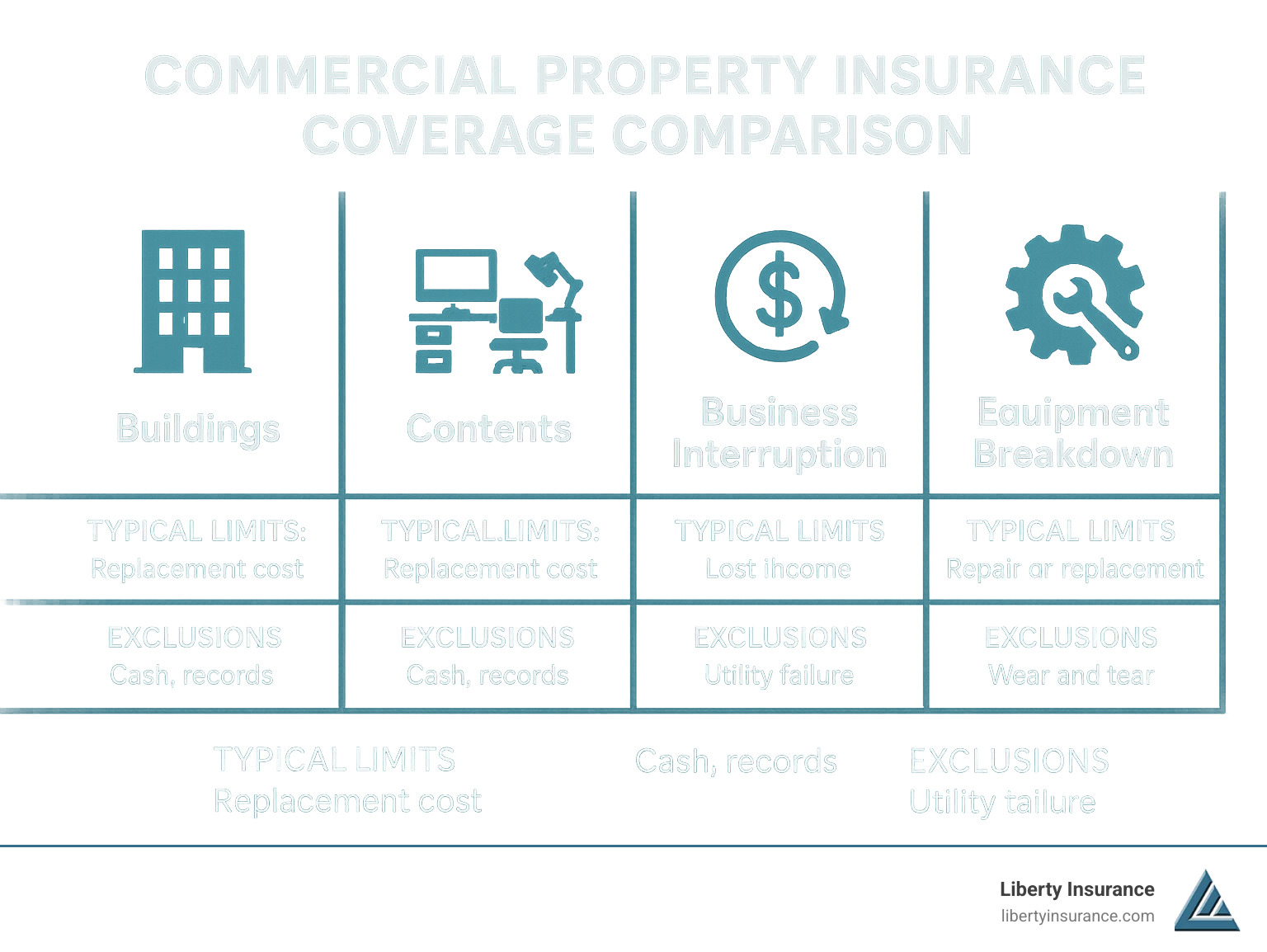
| Commercial Property Insurance | Covers damage to business property from fires, theft, and natural disasters. | Any business with a physical location. | Ensures business continuity in case of property damage. |
| Workers’ Compensation Insurance | Covers medical expenses and lost wages for injured employees. | Businesses with employees. | Required by law in most states and protects against employee lawsuits. |
| Business Interruption Insurance | Covers lost income due to disasters that disrupt business operations. | Businesses dependent on physical location operations. | Helps businesses recover quicker by covering operating costs during closure. |
Benefits of Commercial Insurance for Small Businesses
Did you know that 40% of small businesses will experience a property or liability loss within the next decade? That’s where commercial insurance steps in as your financial safety net.
Here’s the deal: commercial insurance isn’t just a nice-to-have. It’s a must-have for anyone serious about protecting their business. Let’s dive into the specific benefits that make it an essential part of your business toolkit.
Financial Protection Against Unexpected Losses
Imagine this: one day, everything is running smoothly, and the next, disaster strikes. Commercial insurance cushions the financial blow from unexpected events, like fires or theft. When these events occur, insurance ensures that you’re not footing the entire bill out-of-pocket.
Pro Tip: Never underestimate the impact of a small incident. A single lawsuit could cost you thousands of dollars.
Legal Disputes and Claims Management
Legal battles can drain your resources faster than you can say “lawsuit.” Having insurance means you have a team ready to handle legal disputes, covering legal fees, and possible settlements. In other words, it keeps your business afloat during tough times.
Step #1: Secure a General Liability Insurance to cover claims related to bodily injury or property damage.
Providing Peace of Mind
Let’s face it: running a small business is stressful. But knowing that you’re covered by commercial insurance allows you to focus on growing your business without the constant worry of what-ifs.
This peace of mind is invaluable. It enables you to make bold moves and take calculated risks, knowing that your insurance has your back.
Cost Factors of Small Business Insurance
Ever wondered why some small businesses pay more for insurance than others? It’s not as random as it seems. There are specific factors that can drive your premiums up or down.
Understanding these factors can save you a ton of money. Whether you’re a one-person show or a growing startup, knowing what impacts your costs can help you make smarter decisions.
Key Factors Influencing Insurance Premiums
Insurance premiums aren’t just pulled out of thin air. They’re calculated based on a few critical factors. This means you have some control over how much you pay. Here’s the deal: the type of industry you’re in and the size of your business play major roles in determining your insurance costs.
| Factor | Description | Impact on Cost |
|---|---|---|
| Industry Type | The nature of the business and associated risks. | High-risk industries like construction or health have higher premiums. |
| Business Size | Number of employees and total revenue. | Larger operations often see increased costs. |
| Location | Where your business is based. | Urban areas might cost more due to higher risk exposure. |
| Claims History | Past insurance claims filed by the business. | Frequent claims can lead to higher premiums. |
Pro Tip: Keep a clean claims history to negotiate better rates.
The size of your business doesn’t just relate to how many people you employ. Revenue also plays a big part. A small bookstore will pay differently from a massive tech firm. But, here’s the kicker: better risk management can lower costs regardless of your industry.
Choosing the Right Insurance for Your Small Business
Did you know that 40% of small businesses have no insurance at all? That’s risky business! But you don’t have to be in that camp. Let’s break down how you can choose the right insurance for your small business.
Choosing the right insurance can save you from unexpected financial disasters. Here is the deal: you need to be strategic about what coverage you get. It’s not just about picking the cheapest option. It’s about picking the one that fits your business like a glove.
Assessing Business Risks and Coverage Needs
First, you need to understand your business risks. What could potentially go wrong? Identify vulnerabilities in areas like operations, assets, and employees. This is Step #1. Next, align these risks with the types of insurance that can protect against them. For example, if you run a restaurant, consider liability insurance in case someone gets sick.
Find out what specific risks apply to your industry and location.
Pro Tip: Talk to other business owners in your industry to get insights into what coverage they have found essential.
Evaluating and Comparing Insurance Providers
Now, you need to evaluate potential insurance providers. Don’t just go with the first quote you get. Step #2: Compare at least three quotes from different providers. Look at not just the price, but also what each policy covers. Some might offer more comprehensive protection for a slightly higher premium, which could be a better deal in the long run.
Here’s a quick checklist to guide you:
- Check the provider’s reputation and financial stability.
- Look for customer reviews and ratings.
- Ask questions about coverage limits and exclusions.
- Inquire about the process of filing claims.
- Consider the provider’s experience with businesses in your industry.
Comparing policies side-by-side can be daunting. Use a table to keep track of details:
| Provider | Premium Cost | Coverage Limits | Exclusions | Customer Service |
|---|---|---|---|---|
| Provider A | $500/month | $1,000,000 | Natural Disasters | 24/7 Support |
| Provider B | $450/month | $900,000 | Flooding | Business Hours Only |
Now you’re equipped with the tools to make an informed choice. Remember: the best insurance for your business is the one that you honestly feel will protect it when things go south.
Case Studies and Examples of Small Business Insurance

Ever wonder how small businesses survive storms, fires, or lawsuits? Here’s a secret: insurance. Let’s dive into real-world examples where insurance was a game-changer.
While insurance might seem like just another expense, in reality, it can be a company’s lifeline. These case studies show the transformative power of having the right coverage at the right time.
Real-World Examples of Businesses Benefiting from Insurance
Take Joe’s Coffee Shop, a local favorite. One day, a kitchen fire almost took everything down. Thanks to their property insurance, they were back serving lattes in no time. This insurance saved them from what could have been a financial nightmare, covering repairs and lost income during the downtime.
Another example? Lisa’s Bookstore had a flood that destroyed half their inventory. Their commercial insurance policy covered the inventory loss, allowing them to restock and retain their loyal customer base. Without it, Lisa would have faced a devastating financial hit.
Scenarios Where Insurance Saved Businesses from Financial Loss
Imagine running a tech startup and facing a data breach. Scary, right? That’s what happened to a small IT firm. Thanks to their cyber insurance, they managed to cover the cost of data recovery and legal fees, protecting them from potentially crippling costs.
Here’s the deal: liability insurance can also be a savior. A local bakery faced a lawsuit after a customer claimed to have suffered allergic reactions. Their liability coverage handled the legal costs, saving the business from a potential shutdown.
Lessons Learned from Uninsured Small Business Failures
But not every story has a happy ending. A small print shop ignored insurance, thinking it was unnecessary. When a major storm hit, they lost critical equipment and the means to operate. Without insurance, they couldn’t afford to rebuild and had to close their doors for good. It’s a harsh reminder of the importance of being prepared.
Another lesson came from a boutique clothing store owner who faced a customer injury claim without liability insurance. The legal costs and settlement fees were overwhelming, leading to bankruptcy. This illustrates how skipping coverage can lead to catastrophic outcomes.
Pro Tip: Always evaluate the specific risks of your industry and tailor your insurance coverage accordingly. It could save your business from unexpected disasters.
Summary
In the ever-changing landscape of business, one thing remains certain: risks are inevitable. Equipping your small business with the right insurance not only shields you from financial loss but also empowers you to focus on growth and innovation. So, assess your needs, explore your options, and choose wisely. Remember, the best time to prepare for a storm is before it hits.
Answers to Common Questions
What are the three essential small business insurance policies?
The three essential policies are General Liability Insurance, Professional Liability Insurance, and Commercial Property Insurance.
Why is insurance important for small businesses?
Insurance protects against financial loss from events like lawsuits, property damage, and unforeseen accidents, ensuring business continuity.
How does general liability insurance differ from professional liability insurance?
General liability covers physical injuries and property damage, while professional liability protects against claims of negligence or mistakes in services provided.
How can small businesses save on insurance costs?
Businesses can save by bundling policies, increasing deductibles, and implementing safety measures to reduce risks.
What factors influence the cost of small business insurance?
Factors include industry type, business size, location, and claims history.
